
Shubh Consultancy Services
Get your Trademark Opposition
Trademark Opposition in India
A trademark can become an important asset for a business, representing its name, reputation, products, services, and customer recognition. However, registering a trademark is not always an uncontested process. After a trademark application is advertised in the Trade Marks Journal, a third party may challenge its registration by filing a Trademark Opposition.
Trademark opposition gives an eligible person or business an opportunity to raise objections against the registration of a published trademark before it proceeds to registration.
Under Section 21 of the Trade Marks Act, 1999, any person may give notice of opposition to the registration of a trademark within the prescribed period. The opposition process is governed by the Act and the Trade Marks Rules, 2017.
At Shubh Consultancy Services, we assist trademark owners and applicants with opposition notices, counterstatements, supporting documentation, filing assistance, evidence-related requirements, and further procedural stages.
What is Trademark Opposition
Trademark Opposition is a legal proceeding through which a person or entity challenges the registration of a trademark after the application has been advertised or re-advertised in the Trade Marks Journal.
The purpose of an opposition is to give interested parties an opportunity to present reasons why a particular trademark should not proceed to registration.
An opposition is different from a trademark objection raised during examination. A trademark objection generally originates from the Trade Marks Registry during examination, whereas an opposition is initiated by a third party under the prescribed procedure.
Who Can File a Trademark Opposition?
Under Section 21 of the Trade Marks Act, 1999, any person may oppose the registration of a trademark within the prescribed period. The law does not require the opponent to already own a registered trademark.
Depending on the circumstances, an opposition may be filed by:
- A registered trademark proprietor
- An applicant having an earlier trademark application
- A competing business
- A person claiming rights in an earlier mark
- A business or individual affected by the proposed registration
- Any other person entitled to oppose under the applicable law
The opponent must provide the required particulars and grounds of opposition in the prescribed manner.
When Can a Trademark Be Opposed?
Trademark opposition generally becomes possible after the trademark application has been advertised or re-advertised in the Trade Marks Journal.
Under Section 21, a notice of opposition may be filed within three months from the date of advertisement or re-advertisement, with a further period of up to one month that may be allowed by the Registrar in accordance with the prescribed procedure.
The Trade Marks Rules, 2017 prescribe filing of the opposition in Form TM-O within four months from the date of publication of the relevant journal advertisement or re-advertisement.
Because the opposition period is time-sensitive, the publication date should be checked carefully before taking action.
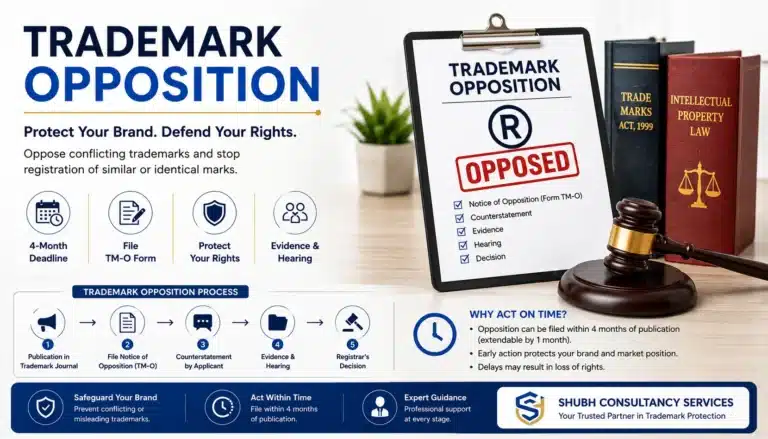
Reasons for Trademark Opposition
A trademark may be opposed for several reasons depending on the facts and rights relied upon by the opponent.
Common grounds may include:
- The proposed mark is identical or deceptively similar to an earlier trademark.
- Registration may create confusion or association among consumers.
- The applicant is attempting to register a mark over which another party claims prior rights.
- The trademark lacks sufficient distinctiveness.
- The mark is descriptive or otherwise unsuitable for registration under the applicable provisions.
- The application has been filed in bad faith.
- The proposed mark may mislead consumers.
- Registration may conflict with an earlier right.
- The trademark may fall within a statutory prohibition.
- The opponent has prior use or other legally protectable rights in the mark.
The appropriate grounds depend on the evidence and circumstances of each opposition.
Trademark Opposition Based on an Earlier Trademark
One of the common reasons for opposition is the existence of an earlier trademark that is identical or similar to the contested mark.
When assessing such a matter, factors may include:
- Similarity between the marks
- Nature of the goods or services
- Classification
- Intended customers
- Trade channels
- Overall commercial impression
- Evidence of prior use
- Likelihood of confusion or association
A proper opposition should explain the basis of the earlier right and why registration of the later mark should not be permitted.
Trademark Opposition Based on Prior Use
Trademark rights are not always determined solely by registration.
In suitable circumstances, an opponent may rely on prior use and other evidence to establish rights in a mark. Evidence may include invoices, advertisements, packaging, sales records, website material, promotional campaigns, and other business records.
The relevance and strength of such evidence depend on the facts of the case.
Trademark Opposition Process in India
The Trademark Opposition Process in India generally involves several stages.
Step 1: Trademark Advertisement
The trademark application is advertised or re-advertised in the Trade Marks Journal.
Step 2: Review the Published Mark
A potential opponent reviews the published trademark and determines whether there are legitimate grounds to challenge its registration.
Step 3: Prepare the Opposition Notice
The opponent prepares a notice containing the required details of the contested application, earlier rights, opposing party, and grounds of opposition.
Step 4: File Form TM-O
The opposition notice is filed in the prescribed Form TM-O within the applicable period and with the prescribed fee. Rule 42 specifically provides for filing a notice of opposition in Form TM-O.
Step 5: Service on the Applicant
The Registrar ordinarily serves a copy of the opposition notice on the trademark applicant.
Step 6: Counterstatement
The applicant gets an opportunity to defend the trademark by filing a counterstatement.
Under Rule 44, the counterstatement is filed in Form TM-O within two months from receipt of the copy of the notice of opposition.
Step 7: Evidence
The opposition may proceed to the evidence stage. The opponent may file evidence in support of the opposition or communicate an intention to rely on the facts already stated.
The applicant may then respond with its evidence, followed by further evidence where permitted under the applicable procedure.
Step 8: Hearing
After completion of the relevant evidence stage, the Registrar may schedule a hearing and provide the parties an opportunity to present their submissions.
Step 9: Decision
After considering the pleadings, evidence, and submissions, the Registrar passes a decision regarding the opposition and the trademark application.
Notice of Opposition
A Trademark Opposition Notice is the formal document through which an opponent communicates its challenge to the registration of a trademark.
Under Rule 43, the notice should contain prescribed information, including:
- Application number of the contested trademark
- Goods or services covered by the application
- Name of the trademark applicant
- Details of the earlier trademark or right relied upon
- Details of the opposing party
- Grounds on which the opposition is based
The notice must also be properly verified by the opponent or authorised agent.
A well-structured opposition notice should clearly explain the basis of the challenge instead of relying on general statements.
Trademark Opposition Form – TM-O
The current prescribed form for filing a trademark opposition is Form TM-O.
The official TM-O form covers opposition proceedings and certain other trademark proceedings, including counterstatements. The form requires the relevant details of the application, mark, class, opposition, and parties involved.
Important: Older online content may refer to TM-5 for trademark opposition. The current Trade Marks Rules, 2017 prescribe TM-O for a notice of opposition under Rule 42.
Trademark Opposition Time Limit
The opposition deadline is one of the most important aspects of the process.
Section 21 provides that a person may oppose a trademark within three months from the date of advertisement or re-advertisement, with a further period of up to one month that may be allowed by the Registrar in the prescribed manner.
Rule 42 specifies that the notice of opposition is to be filed in Form TM-O within four months from publication of the relevant trademark journal advertisement or re-advertisement.
Since the deadline is calculated from the relevant publication, the Trade Marks Journal entry should be checked carefully before filing an opposition.
What Happens After a Trademark Opposition is Filed?
Once an opposition is filed, the Registrar ordinarily communicates the opposition to the trademark applicant.
The applicant then has an opportunity to file a counterstatement explaining why the opposition should not prevent registration.
The proceeding can subsequently move through evidence, hearing, and decision stages depending on how the matter progresses.
Therefore, receiving a trademark opposition does not automatically mean that the trademark application will be rejected.
What is a Trademark Counterstatement?
A Trademark Counterstatement is the formal response submitted by the trademark applicant against the opposition notice.
The counterstatement allows the applicant to:
- Address the allegations made by the opponent
- Admit or deny relevant facts
- Explain the applicant’s position
- Present grounds supporting registration
- Respond to claims relating to similarity or prior rights
- Establish the applicant’s own rights and use where relevant
Under Rule 44, the counterstatement is filed in Form TM-O within two months from receipt of the opposition notice.
What Happens If the Applicant Does Not File a Counterstatement?
Failure to file the counterstatement within the prescribed period can have serious consequences.
Section 21 and Rule 44 provide for the trademark application to be treated as abandoned where the required counterstatement is not filed within the applicable period.
Therefore, an applicant who receives an opposition notice should act promptly rather than waiting until the deadline approaches.
Evidence in Trademark Opposition Proceedings
Evidence can play an important role in an opposition proceeding.
Depending on the grounds involved, evidence may include:
- Trademark usage records
- Sales invoices
- Product packaging
- Advertising material
- Promotional campaigns
- Website records
- Social media presence
- Sales figures
- Customer information
- Business documents
- Trademark registration or application records
- Documents establishing prior rights
Under Rule 45, the opponent has a prescribed period after service of the counterstatement to file evidence in support of the opposition or communicate that it intends to rely on the facts stated in the notice.
The type and extent of evidence required will depend on the particular dispute.
Trademark Opposition Hearing
After the evidence stage is completed, the Registrar gives notice of the first hearing date.
Rule 50 provides that the first hearing date should be at least one month after the date of the first hearing notice. The Registrar may also consider written arguments submitted by the parties.
At a Trademark Opposition Hearing, the parties or their authorised representatives may present submissions based on the pleadings and evidence filed in the proceeding.
Preparation should include reviewing:
- Opposition notice
- Counterstatement
- Evidence
- Earlier trademark rights
- Relevant documents
- Written submissions
- Points requiring clarification during the hearing
Trademark Opposition Decision
After considering the pleadings, evidence, and hearing submissions, the Registrar decides the opposition.
Depending on the findings, the opposition may be allowed or dismissed, and the trademark application may proceed or face refusal to the extent determined by the Registrar.
The decision is communicated to the parties in writing. Rule 50 specifically provides for communication of the Registrar’s decision to the parties.
Trademark Opposition Fees
A government fee is payable for filing a notice of opposition. The applicable fee depends on the prescribed fee schedule and the filing circumstances.
The current IP India fee schedule lists the prescribed fee for a notice of opposition under Section 21(1), along with the corresponding Form TM-O.
Professional fees, if any, for preparing and handling the opposition are separate from government charges.
Because official fees can be revised, the current fee schedule should be checked before filing.
Why Shubh Consultancy Services?
Documents Required for Trademark Opposition
The documents required depend on the basis of the opposition.
Generally, relevant information and documents may include:
- Details of the trademark application being opposed
- Trademark Journal publication details
- Details of the opponent
- Earlier trademark application or registration details
- Evidence of prior use, where applicable
- Sales invoices
- Product packaging
- Advertising material
- Business records
- Website or digital evidence
- Authorisation documents, where applicable
- Supporting affidavits and exhibits, where required
The documents should support the specific grounds raised in the opposition.
What Information is Required in a Trademark Opposition Notice?
A notice of opposition should contain the information prescribed under the Trade Marks Rules.
This generally includes:
Details of the Contested Trademark
- Application number
- Applicant name
- Goods or services covered
- Relevant class or classes
Details of the Earlier Right
Where the opposition relies on an earlier trademark or other right, the relevant details should be provided.
These may include:
- Trademark application number
- Registration number
- Relevant class
- Proprietor information
- Nature of the earlier right
Details of the Opponent
The opposition notice should identify the person or entity filing the opposition and provide the required address and service details.
Grounds of Opposition
The notice must clearly state the grounds on which registration is being opposed.
Trademark Opposition vs Trademark Objection
Trademark opposition and trademark objection are often confused, but they arise at different stages.
| Trademark Objection | Trademark Opposition |
|---|---|
| Usually arises during examination of the trademark application | Usually arises after the application has been advertised |
| Raised through the examination process | Initiated by a third party |
| Communicated through an examination report | Filed through a notice of opposition |
| Applicant responds to the Examiner’s concerns | Applicant defends the application against the opponent |
| Governed by the examination procedure | Governed by opposition proceedings under Section 21 and relevant Rules |
A trademark objection is therefore not the same as an opposition.
Trademark Opposition vs Trademark Infringement
These are also different legal concepts.
Trademark Opposition challenges the registration of a trademark before the registration process is completed.
Trademark Infringement generally concerns unauthorised use of a protected trademark and is a separate legal issue.
A trademark opposition is therefore not itself an infringement proceeding.
Can a Trademark Opposition Be Withdrawn?
An opponent may seek to withdraw an opposition, subject to the applicable procedure and the status of the proceeding.
The appropriate procedural step can depend on the stage of the matter and circumstances of the parties.
Similarly, parties may explore settlement or other arrangements where legally appropriate, but any such arrangement should be handled in accordance with the applicable trademark procedure.
What Happens If No Opposition is Filed?
If no opposition is filed within the prescribed period and other registration requirements are satisfied, the trademark application can proceed towards registration in accordance with the applicable provisions.
Rule 53 provides for entry of the trademark on the register where no opposition is filed within the specified period or where an opposition is dismissed, subject to the Act and applicable requirements.
How Shubh Consultancy Services Can Help With Trademark Opposition
Trademark opposition proceedings involve strict timelines, formal filings, evidence, and multiple procedural stages.
Shubh Consultancy Services can assist trademark applicants and opponents with the procedural and documentation aspects of opposition matters.
Our assistance may include:
- Reviewing the trademark publication
- Understanding the basis of the opposition
- Preparing the opposition notice
- Assistance with Form TM-O
- Counterstatement preparation assistance
- Document and evidence organisation
- Filing assistance
- Monitoring procedural updates
- Assistance with hearing-related requirements
- Guidance throughout the opposition process
Our objective is to help trademark owners and applicants manage the opposition process in an organised manner.
Protect Your Trademark Rights With Timely Action
A trademark opposition can affect whether a brand successfully moves from application to registration. Whether you are planning to oppose a trademark or have received an opposition against your own application, acting within the prescribed timeline is important.
Shubh Consultancy Services provides assistance with trademark opposition notices, Form TM-O, counterstatements, documentation, evidence-related requirements, filing, and procedural follow-up.
Contact Shubh Consultancy Services for assistance with Trademark Opposition in India.
Frequently Asked Questions About Trademark Opposition
Trademark Opposition is a proceeding through which a person or entity challenges the registration of a trademark after the application has been advertised or re-advertised in the Trade Marks Journal.
Under Section 21, any person may give notice of opposition to the registration of a trademark within the prescribed period.
A trademark opposition can generally be filed after the trademark application is advertised or re-advertised in the Trade Marks Journal and within the statutory period.
Section 21 provides three months from advertisement or re-advertisement, with a further period of up to one month that may be allowed by the Registrar. Rule 42 prescribes filing Form TM-O within four months from publication of the relevant journal advertisement or re-advertisement.
The current prescribed form for filing a notice of opposition is Form TM-O.
The current Trade Marks Rules, 2017 prescribe Form TM-O for a notice of opposition under Rule 42. References to TM-5 in older online material may relate to the earlier form structure.
A counterstatement is the applicant's formal response to a trademark opposition. It sets out the applicant's position regarding the allegations made in the opposition notice.
Under Rule 44, the counterstatement is to be filed in Form TM-O within two months from receipt of the copy of the opposition notice.
Failure to file the counterstatement within the applicable period can result in the trademark application being treated as abandoned.
Documents depend on the grounds of opposition and may include earlier trademark records, proof of use, invoices, advertising material, business records, and other supporting evidence.
A hearing is a stage at which the Registrar provides the parties an opportunity to present their submissions after the relevant procedural and evidence stages.
The cost can include the prescribed government filing fee and, where professional assistance is used, separate professional charges. The current government fee should be checked from the official IP India fee schedule.
Yes. Section 21 permits any person to give notice of opposition within the prescribed period; ownership of a registered trademark is not an absolute requirement for filing an opposition.
No. A trademark objection generally arises during examination by the Registry, while a trademark opposition is initiated by a third party after advertisement of the application.
The applicant receives the opposition and can file a counterstatement. The matter may then proceed through evidence, hearing, and decision stages depending on the circumstances.
The Registrar's decision can be subject to further legal remedies available under the applicable law. The appropriate remedy depends on the nature and date of the decision and the prevailing statutory framework.
It is possible to participate in trademark proceedings without professional assistance in some circumstances. However, opposition matters can involve strict deadlines, pleadings, evidence, and hearings, so professional assistance may be useful where the matter is complex.