
FSSAI Issues Notices to 6 Beverage Companies Over Misleading Energy Drink Claims
FSSAI Takes Action Against Six Beverage Brands
FSSAI Issues Notices to 6 Beverage Companies over alleged misleading “Energy Drink” claims, marking another significant step in strengthening food safety and consumer protection in India. The Food Safety and Standards Authority of India (FSSAI) has issued notices to six leading beverage manufacturers regarding the use of the term “Energy Drink” and certain promotional claims on product labels. If you would like to understand the role and responsibilities of the food regulator, read our detailed guide on What is FSSAI? This development highlights the importance of complying with FSSAI’s food labelling and advertising regulations and serves as an important reminder for all Food Business Operators (FBOs) to ensure their product labels and marketing materials meet regulatory requirements.
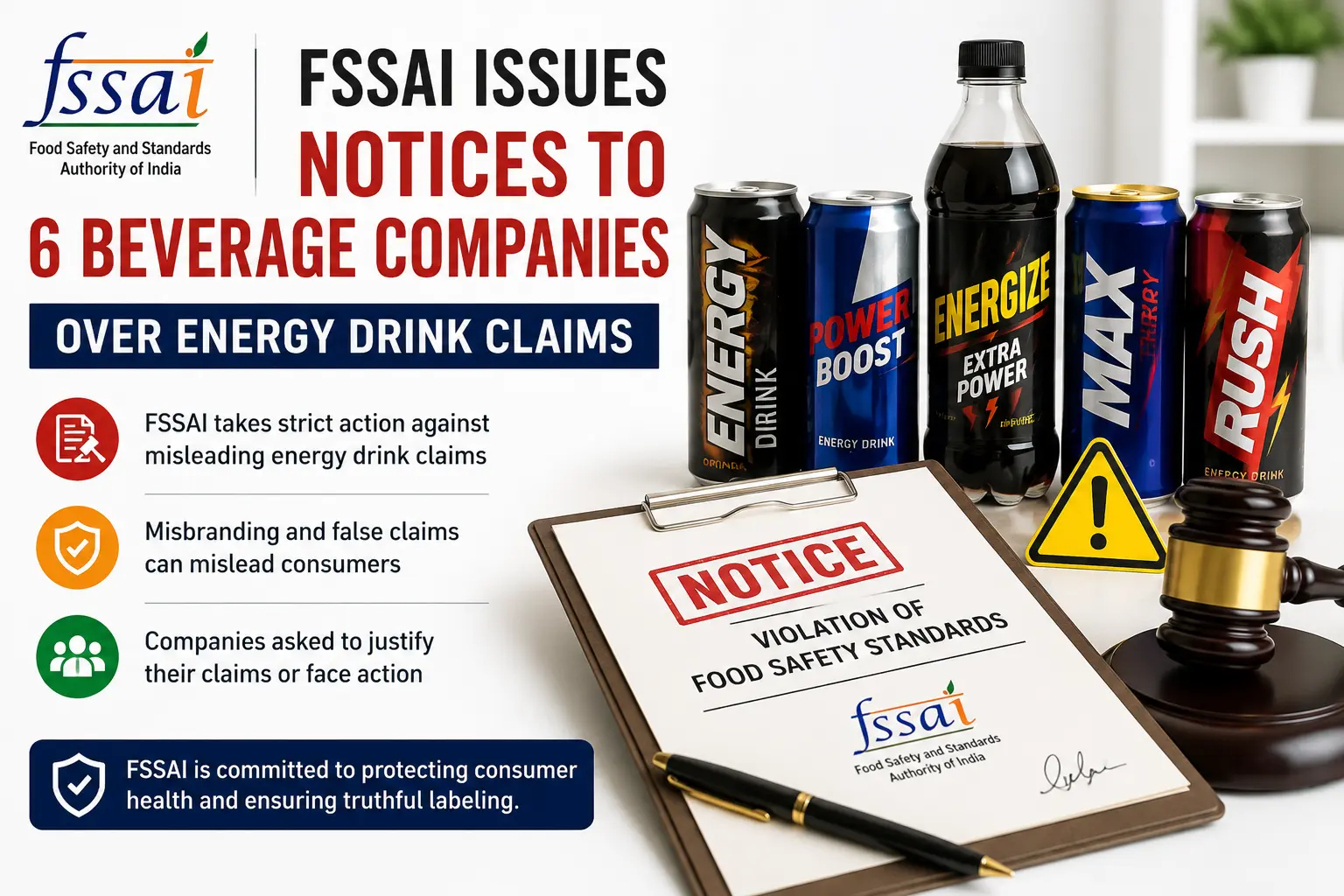
Why Did FSSAI Issues Notices to 6 Beverage Companies?
The FSSAI Issues Notices to 6 Beverage Companies initiative focuses on ensuring that food businesses do not make misleading claims that could confuse consumers. According to reports, the regulator questioned the use of the term “Energy Drink” and related promotional statements on certain beverage products. Businesses have been asked to explain their labelling and marketing practices to determine whether they comply with the Food Safety and Standards Act, 2006, and applicable FSSAI regulations.
Which Beverage Companies Received Notices?
The notices were issued to the following six beverage brands:
- Red Bull Energy Drink
- PepsiCo India’s Adrenaline Rush Energy Drink
- Reliance Consumer Products’ Campa Energy Gold Boost
- Sting Energy Drink
- Hell Energy
- Coca-Cola-backed Monster Energy
The companies have reportedly been asked to explain the use of product descriptions and promotional claims appearing on their labels and marketing material.
Why Did FSSAI Issue These Notices?
FSSAI stated that the concern is related to misbranding and misleading product claims, not an outright ban on the products.
The regulator observed that some beverages were marketed using descriptors such as “Energy Drink” despite the absence of an officially notified FSSAI standard for that category. Additionally, promotional statements claiming benefits such as:
- Boosts energy levels
- Vitalizes body and mind
- Enhances focus
- Helps reduce weakness
- Improves performance
may be treated as functional or therapeutic claims, which are generally not permitted for food products unless specifically allowed under the applicable regulations.
What Does FSSAI Say About "Energy Drinks"?
According to FSSAI, the Food Category System is designed to classify food products for regulatory purposes and should not automatically be used as a marketing or product naming tool.
The regulator has emphasized that food businesses should avoid using product names, branding, or advertising that may mislead consumers regarding the nature, purpose, or health benefits of a food product.
Misleading Claims Under the FSS Act
Under the Food Safety and Standards Act, 2006, food businesses must ensure that labels, advertisements, and promotional materials are truthful and do not mislead consumers.
Examples of claims that may attract regulatory scrutiny include:
- Therapeutic claims
- Disease prevention claims
- Unverified health benefit claims
- Exaggerated nutritional claims
- Misleading product names
- Unsupported performance claims
FSSAI has increased enforcement against misleading branding across multiple food categories in recent months as part of its consumer protection initiatives.
What Does This Mean for Food Business Operators?
This development serves as an important reminder for all Food Business Operators (FBOs) to carefully review:
- Product labels
- Packaging
- Brand names
- Marketing material
- Social media advertisements
- Website content
- Product descriptions
Businesses should ensure that all claims comply with FSSAI regulations and are supported by applicable standards or approvals where required.
Importance of Compliant Food Labelling
Proper food labelling helps:
- Protect consumer interests
- Improve transparency
- Build customer trust
- Reduce legal risks
- Ensure regulatory compliance
- Enhance brand reputation
Incorrect or misleading labelling may result in notices, product recalls, penalties, or other regulatory actions depending on the nature of the violation.
How Can Food Businesses Stay Compliant?
Food businesses should:
- Obtain the correct FSSAI Registration or Licence.
- Use only approved product descriptions.
- Avoid unverified health or therapeutic claims.
- Regularly review product labels and advertisements.
- Keep updated with the latest FSSAI notifications and advisories.
- Seek professional guidance before launching new products or packaging.
Maintaining compliance not only helps avoid regulatory issues but also strengthens consumer confidence in your brand.
Need Assistance with FSSAI Compliance?
If you are planning to launch a new food product or want to review your existing food labels for compliance, Shubh Consultancy Services can assist you with:
- FSSAI Registration
- State & Central FSSAI Licence
- Licence Renewal
- Licence Modification
- Food Label Compliance Guidance
- Regulatory Consultation
- Food Business Compliance Support
Our experienced professionals help food businesses across India understand and comply with the latest FSSAI regulations.
Conclusion
The FSSAI Issues Notices to 6 Beverage Companies case demonstrates the regulator’s continued focus on transparent food labelling and responsible marketing practices. Food businesses should regularly review product labels, packaging, advertising materials, and health claims to ensure compliance with FSSAI regulations. Staying updated with the latest regulatory requirements not only helps avoid legal issues but also builds customer trust and strengthens your brand reputation.