
FSSAI Metallic Pins Advisory: New Food Packaging Rules Explained
Introduction
FSSAI Metallic Pins Advisory is a significant food safety update issued by the Food Safety and Standards Authority of India (FSSAI) to enhance consumer protection and improve packaging standards across the food industry. If you are unfamiliar with FSSAI and its role in regulating food businesses, you can read our detailed guide on What is FSSAI? Through this advisory, FSSAI has directed all Food Business Operators (FBOs) to immediately stop using metallic pins, staples, wires, and similar sharp metallic objects in food products and food packaging materials. The advisory aims to prevent accidental physical contamination that may occur during manufacturing, packaging, storage, or transportation and to encourage the adoption of safer food-grade packaging practices.
The use of metallic fasteners in food packaging can pose serious health risks if they accidentally come into contact with or enter food products. Such contamination may lead to choking hazards, injuries to the mouth or digestive tract, and other consumer safety concerns. By issuing this advisory, FSSAI reinforces the importance of safe packaging methods and reminds food businesses of their responsibility to ensure that food products reaching consumers are free from avoidable physical contaminants. Businesses should also ensure they hold a valid FSSAI Food Registration or licence before commencing food-related operations.
What Is the FSSAI Metallic Pins Advisory?
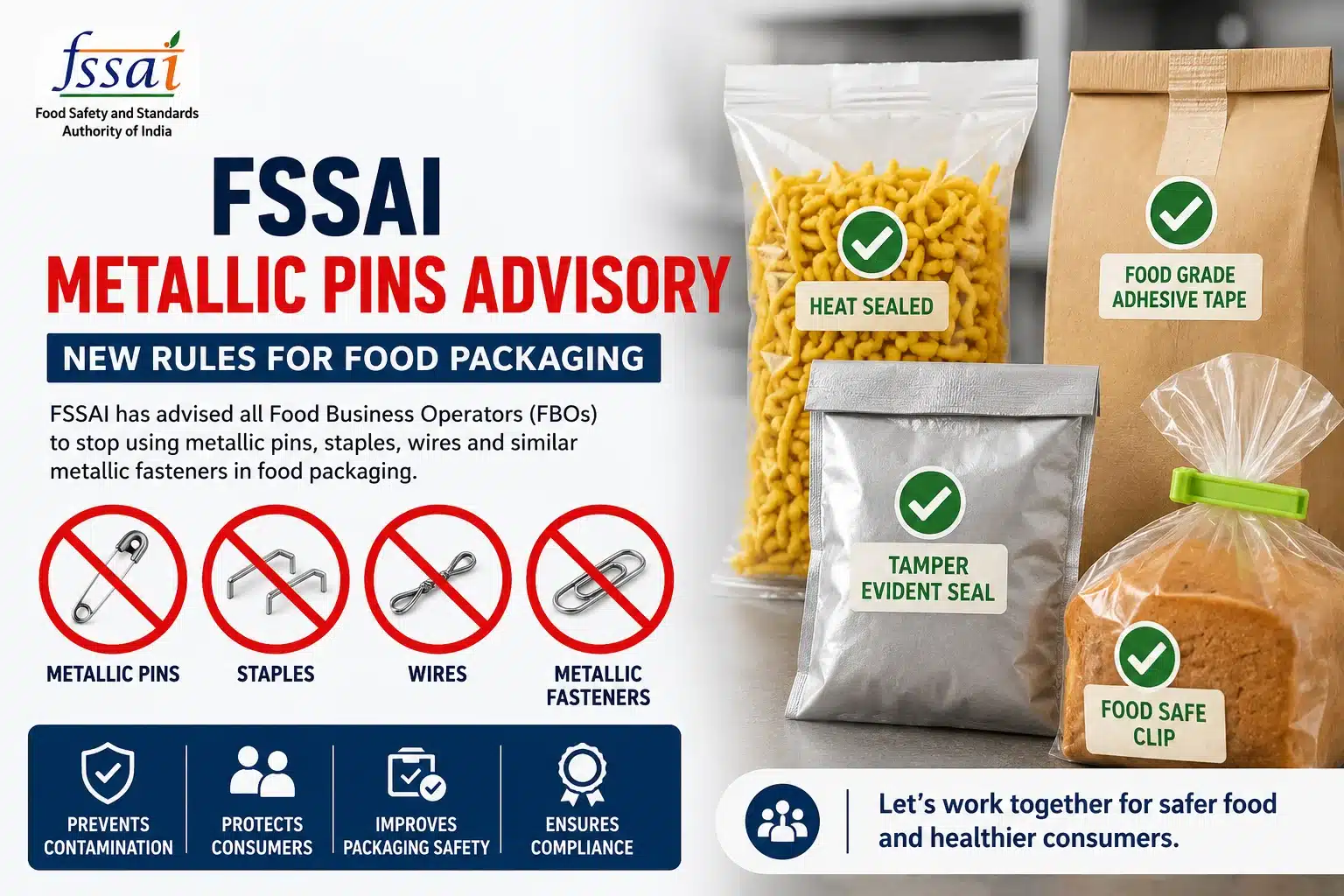
FSSAI has advised all Food Business Operators to stop using metallic pins, wires, staples, and similar metallic fasteners for sealing or securing food packages. Instead, businesses should adopt safer food-grade packaging methods that eliminate the possibility of metal contamination.
The advisory forms part of FSSAI’s continued efforts to improve food safety standards and ensure that food products reaching consumers are free from avoidable physical hazards. Businesses are expected to review their existing packaging processes and replace unsafe practices with safer alternatives wherever required.
Why Did FSSAI Issue the Metallic Pins Advisory?
Physical contamination is one of the major food safety hazards identified during food manufacturing and packaging. Even a small metallic object accidentally entering a food product can result in serious injuries and consumer complaints. Such incidents may also lead to product recalls, regulatory action, and damage to a company’s reputation.
By discouraging the use of metallic pins and wires, FSSAI seeks to reduce preventable food safety risks and promote safer packaging technologies across the food industry. The advisory reinforces the responsibility of every Food Business Operator to ensure that food products are safe throughout manufacturing, storage, transportation, and distribution.
How Does the FSSAI Metallic Pins Advisory Affect Food Businesses?
Food businesses should immediately evaluate their packaging practices and identify whether metallic pins, staples, or wires are being used at any stage of food handling or packaging. Where such materials are used, businesses should replace them with safer alternatives such as heat sealing, tamper-evident seals, or other food-grade packaging methods.
Apart from updating packaging processes, businesses should also train employees, review standard operating procedures, and conduct regular internal inspections to ensure continued compliance with food safety requirements. Preventive measures not only improve compliance but also help reduce the risk of contamination and customer complaints.
How Can Food Businesses Comply with the FSSAI Metallic Pins Advisory?
Food Business Operators should review their packaging systems without delay and ensure that metallic fasteners are no longer used in contact with food products or food packaging. Businesses should also communicate these requirements to suppliers and contract manufacturers to maintain consistent food safety standards throughout the supply chain.
Maintaining proper documentation, following Good Manufacturing Practices (GMP), and implementing an effective Food Safety Management System (FSMS) will further help businesses comply with FSSAI requirements and prepare for regulatory inspections.
What Are the Safe Alternatives to Metallic Pins and Wires in Food Packaging?
Following the latest FSSAI Metallic Pins Advisory, Food Business Operators should replace metallic pins, staples, and wires with safer food-grade packaging solutions. These alternatives not only reduce the risk of physical contamination but also improve packaging quality, consumer safety, and compliance with FSSAI food safety standards.
Some commonly recommended alternatives include:
– Heat sealing for plastic pouches and laminated packaging
– Tamper-evident seals to prevent unauthorized opening
– Food-grade adhesive tapes for secure sealing
– Food-safe plastic clips where appropriate
– Automated sealing and packaging machines
– Food-grade packaging materials approved for food contact
Businesses should evaluate their existing packaging processes and adopt alternatives that are suitable for their products and manufacturing operations. Using safe packaging technologies helps minimise contamination risks, enhances customer confidence, and supports compliance with the latest FSSAI advisory. It also demonstrates a business’s commitment to maintaining high food safety and quality standards.
Conclusion
The latest FSSAI advisory on discontinuing metallic pins and wires in food packaging is an important step towards improving consumer safety and reducing the risk of physical contamination. Every Food Business Operator should review existing packaging practices and adopt safer alternatives to ensure compliance with food safety regulations.
By implementing this advisory proactively, businesses can strengthen consumer confidence, improve product safety, and reduce the risk of regulatory action while demonstrating their commitment to responsible food manufacturing and packaging.